
ADHD and Neurodiversity
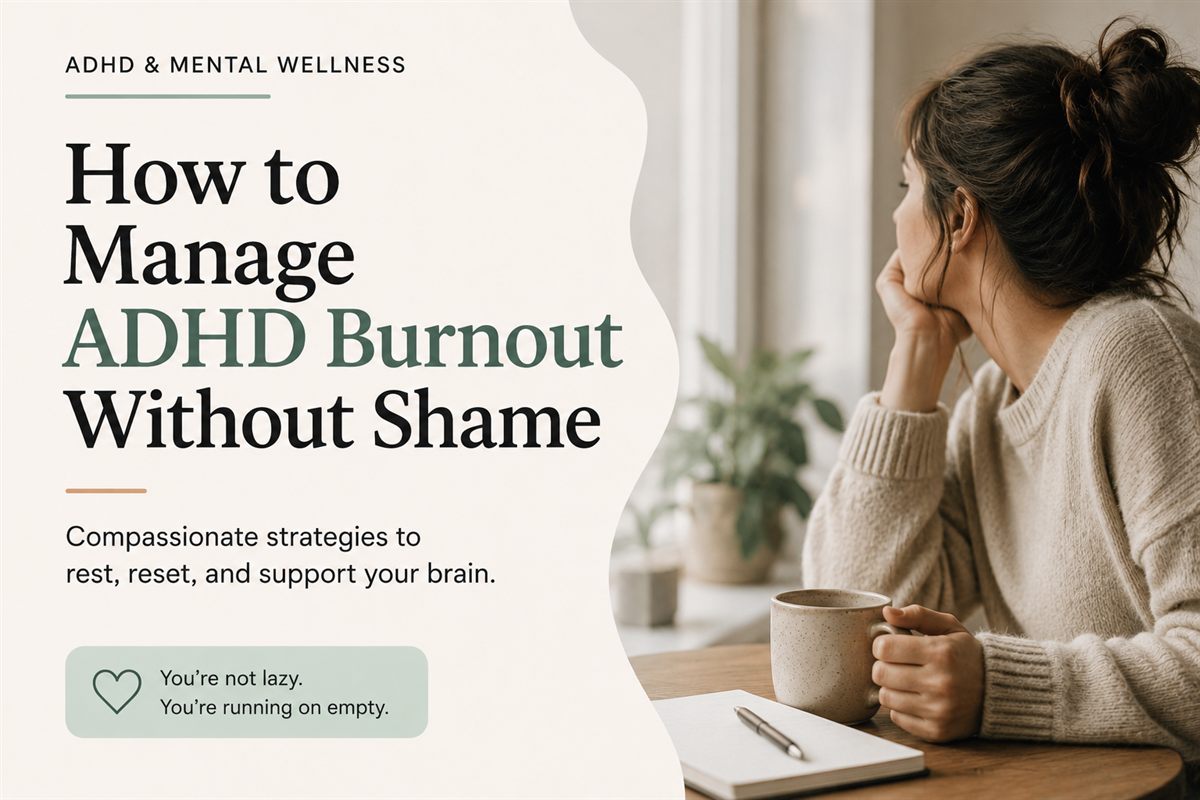
Some people notice ADHD burnout when they cannot start anything, even tasks they care about. Others notice it when every small demand feels sharp, loud, or impossible: one more email, one more decision, one more person needing something. If you are trying to figure out how to manage ADHD burnout, it may help to begin here: this is not laziness, lack of discipline, or a personal failing. It is often what happens when an already stretched nervous system has been carrying too much for too long.
ADHD burnout can look like intense exhaustion, irritability, shut-down, avoidance, emotional flooding, brain fog, or a sudden drop in functioning. You may miss deadlines you would usually meet, stop replying to messages, feel unusually sensitive to noise or demands, or swing between restlessness and complete depletion. For many adults, especially those who have spent years masking, overcompensating, or pushing through, burnout arrives after a long period of trying very hard to appear fine.
Burnout in ADHD is not always just about doing too much. It can also come from constantly managing internal friction. Everyday tasks may take far more effort than other people realise: remembering, initiating, switching attention, regulating emotion, tolerating boredom, recovering from interruptions, and trying not to disappoint anyone along the way.
Over time, that effort adds up. If you also live with trauma, anxiety, depression, concussion symptoms, or a history of being criticised for how you function, the strain can deepen. What looks like procrastination from the outside may actually be a nervous system stuck between overwhelm and collapse.
This is one reason generic productivity advice often falls flat. If your system is overactivated or depleted, more pressure usually does not help. You may need support that addresses both practical impairment and the emotional toll of living in a world that has not always made room for your brain.
The first step is to stop treating burnout like a motivation problem. When you are burned out, your system often needs less input, less urgency, and less self-attack. That does not mean giving up. It means responding accurately to what is happening.
Start by lowering the load in visible ways. Postpone anything non-essential if you can. Reduce decisions where possible by simplifying meals, clothes, or plans for a few days. Ask yourself, what truly has to happen today, and what feels urgent only because I am afraid of falling behind? Those are not always the same thing.
External support matters here. ADHD burnout often worsens when everything stays trapped in your head. Put tasks somewhere you can see them, but keep the list short. Three priorities are usually more realistic than fifteen. If even that feels too much, shrink the task until it becomes tolerable. "Reply to email" might become "open email and read one message". A small start is still movement.
Rest also needs to be more specific than simply telling yourself to relax. Many adults with ADHD do not find unstructured rest restorative, especially when guilt is loud. Recovery may work better if it is concrete: lying in a dark room for twenty minutes, wearing noise-cancelling headphones, eating something with protein, taking a shower, walking without your phone, or sitting beside someone safe without having to talk.
A lot of adults with ADHD burn out not only from tasks, but from the story attached to those tasks. If every missed deadline turns into "I am unreliable" or every messy room becomes "I never get it together", your body is carrying both the original demand and the emotional aftermath.
Shame tends to push people into two painful patterns. One is overdrive, forcing yourself harder, sleeping less, and trying to make up for lost time in a frantic burst. The other is shutdown, avoiding everything because the thought of re-engaging feels unbearable. Both make sense. Neither is a character flaw.
If you want to know how to manage ADHD burnout with more steadiness, it helps to notice the voice you use with yourself when you are struggling. Would you speak that way to someone you love who was clearly overwhelmed? Probably not. A more supportive inner script will not solve burnout on its own, but it can reduce the extra layer of threat that keeps your system stuck.
Burnout rarely appears out of nowhere. Usually there is a pattern underneath it. You may say yes too often because you are used to overcompensating. You may leave tasks until the last minute because urgency is the only thing that cuts through mental fog. You may need more recovery time than your schedule allows, yet keep building your life as if you do not.
Instead of asking only, how do I get back to normal quickly?, it can be more useful to ask, what has my system been trying to manage for months? The answer may include workload, poor sleep, sensory overload, relationship stress, emotional masking, untreated ADHD symptoms, unresolved trauma, or the impact of constantly feeling misunderstood.
This is where nuance matters. Some people need firmer structure. Others need fewer demands. Some need medication review, better sleep support, or work accommodations. Others need trauma-informed therapy because every demand is landing on a nervous system that is already braced for danger. It depends on what is driving the burnout in the first place.
Once the worst of the crash begins to ease, it can be tempting to sprint back into life and catch up on everything. That often leads straight back into exhaustion. Recovery tends to hold better when you rebuild capacity in small, repeatable ways.
Think in terms of rhythm rather than intensity. What helps you stay functional across a week, not just power through one day? That might mean fewer back-to-back commitments, clearer transitions between tasks, visual reminders, body doubling, regular meals, or protected quiet time before and after demanding events.
It can also help to separate high-focus tasks from low-focus tasks. Burnout makes executive functioning more fragile, so expecting yourself to do complex admin, emotionally loaded conversations, and household chores all in one stretch may be unrealistic. Matching the task to your actual energy can reduce the repeated experience of "failing" at tasks that were simply mistimed.
For some adults, burnout is not just about attention regulation. It is also about survival patterns. If you learned early on that mistakes were dangerous, rest was not allowed, or your needs were too much, you may push yourself far past your limits before you even notice distress. Your body may only get your attention once it is already shutting down.
Trauma can also make ordinary ADHD struggles feel emotionally loaded. Forgetting an appointment may trigger disproportionate panic. Falling behind may bring a flood of old hopelessness. Being asked to do one more thing may feel less like a request and more like a threat.
In those cases, practical strategies still matter, but they may not be enough on their own. Trauma-informed therapy can help you understand why certain patterns feel so intense, build safer ways to regulate, and reduce the burden of carrying everything through self-criticism and force. A trauma-informed, neurodiversity-affirming approach does not treat you as broken. It helps make sense of what your system has been trying to do.
If burnout keeps repeating, support may need to be part of the plan rather than the last resort. That could include therapy, medication management, workplace adjustments, help at home, or simply more honest conversations with the people around you about what is and is not sustainable.
For adults in Ontario looking for therapy, it can help to work with someone who understands both ADHD and nervous system overwhelm. At Mindful Connections Therapy, that means looking beyond surface-level productivity tips and paying attention to the deeper patterns shaping exhaustion, avoidance, and self-doubt.
You do not have to wait until everything is falling apart to deserve help. Burnout is often a sign that your current way of coping has been too costly for too long. There is nothing weak about needing a different way forward.
If you are in the middle of ADHD burnout, try not to measure yourself against what you could do before the crash. Meet the version of you that exists today, tired, overloaded, and still worthy of care. Recovery often begins there, not with pushing harder, but with finally listening to what your mind and body have been saying all along.
At Mindful Connections Therapy, we offer neurodiversity-affirming, trauma-informed ADHD therapy for adults in North York, Toronto and online across Ontario. If ADHD burnout keeps cycling back, a free 15-minute consultation is a gentle place to start, no pressure, just a conversation.
Questions, answered
Mindful Connections Therapy
Book a free 15-minute consultation, no pressure, just a chance to see if we are a good fit. Neurodiversity-affirming, trauma-informed ADHD support in North York and online across Ontario.