
After a car accident

A motor vehicle accident can leave more than physical injuries: anxiety behind the wheel, flashbacks, broken sleep, and a body still braced for impact. You will have warm, trauma-informed support to help you feel safe again. In person in North York and Toronto, or online across Ontario.
We go at the pace your system can handle, no pressure to relive anything.
Understanding it
Long after the dents are fixed, a car accident can keep living in your body.
Long after the dents are fixed, a car accident can keep living in your body: a jolt of panic at an intersection, replaying the moment of impact, gripping the wheel, or avoiding driving altogether. Flashbacks, broken sleep, and a fear of driving are common, and for some people this settles into PTSD after a car accident. This is not weakness or overreacting; it is a nervous system that has not yet learned the danger has passed.
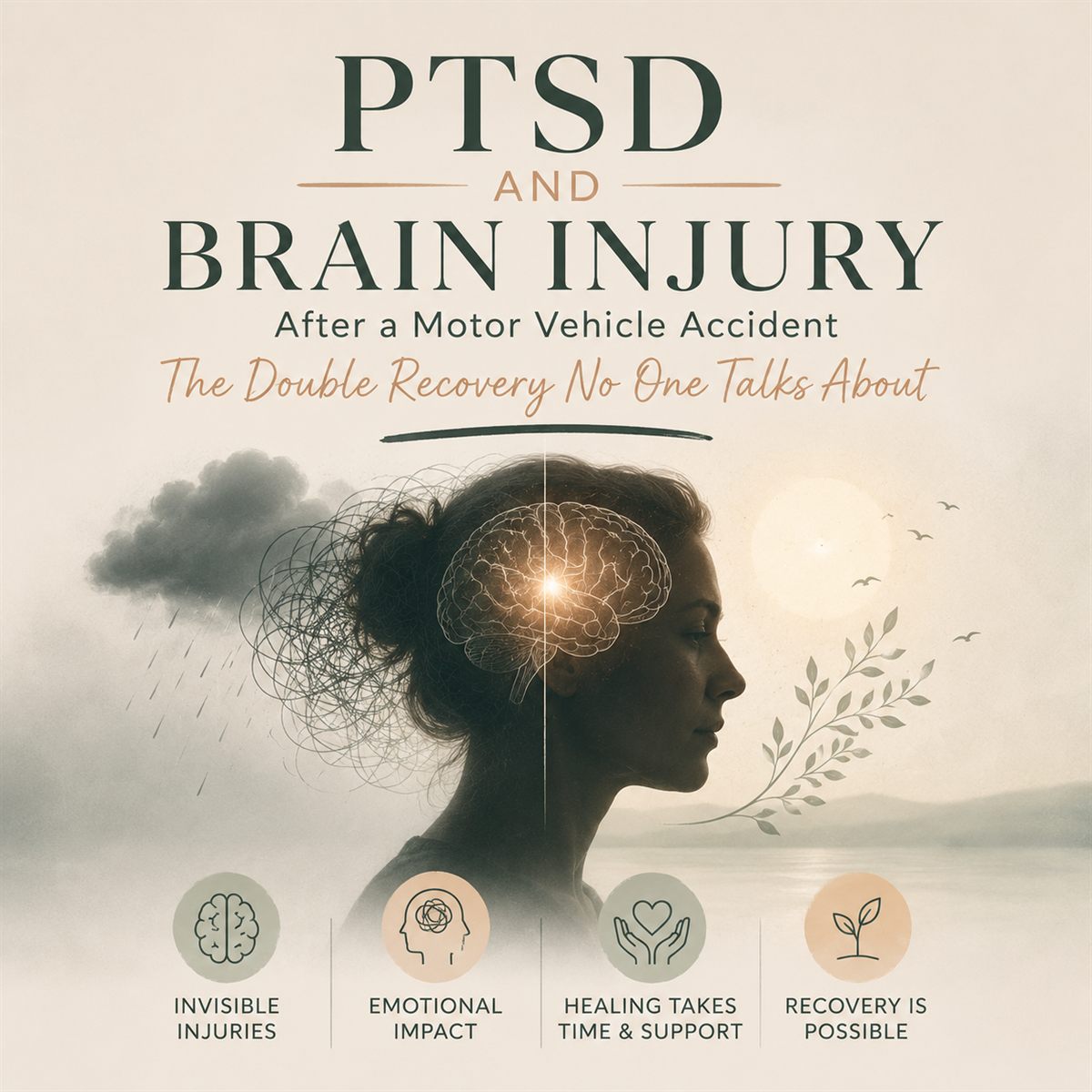
Some people also carry a concussion or whiplash from the crash, where anxiety, low mood and brain fog tangle together. Others are left with guilt, anger, or a loss of confidence that is hard to put into words.
Whatever you are carrying, we work gently and at your pace, calming the body's alarm, easing the fear around driving, and helping the memory of the accident loosen its grip on the present. If getting back behind the wheel is the part that feels hardest, you may also want to read about therapy for driving anxiety.
How we work
Gentle, evidence-based support for the anxiety, flashbacks and driving fear that can follow a crash.
After a crash the nervous system can stay braced for impact. Somatic, grounding work helps settle the panic, the racing heart, and the wired-but-exhausted feeling.
When the moment of impact keeps intruding, EMDR and trauma-informed care help your brain reprocess it, so it loses its charge and stops hijacking the present.
We ease the fear of driving or being a passenger, step by manageable step, so the road feels possible again, never by forcing it.
For the low mood, irritability, guilt and shaken confidence that often follow, space to feel it, make sense of it, and steady yourself.
You might recognize
If some of this resonates, you are not imagining it, and you do not have to carry it alone.
Panic, bracing, or a racing heart when driving or as a passenger. Avoiding the route, the highway, or driving altogether. Flinching at brake lights, horns, or sudden stops.
Replaying the moment of impact, or nightmares about it. On edge, irritable, or not sleeping since the accident. Brain fog, headaches or low mood from a concussion or whiplash.
You do not need a dramatic crash or a visible injury for it to have shaken you. Your experience counts.
Wondering if therapy after an accident is the right fit?
That is exactly what the free 15-minute consultation is for. No pressure, no commitment.
What to expect
A steady companion as you find your footing again, at a pace that feels safe.
A gentle hello. Share what happened and what you are struggling with, no pressure, no jargon.
We ease the overwhelm, build a sense of safety, and, if helpful, coordinate with your care team.
Calming the alarm, easing the driving fear, and gently processing the accident, only when you are ready.
Rebuilding confidence on the road and reconnecting with the things the accident interrupted.
Is this you?
Adults across Ontario carrying the emotional weight of a motor vehicle accident (MVA), recent or long-held.
When driving, or even getting in a car, floods you with dread since the crash.
Intrusive memories, nightmares or flashbacks of the moment it happened.
When a head or neck injury from the crash tangles with anxiety and low mood.
You were not driving, or you witnessed it, and it shook you all the same.
A small collision, but the anxiety, sleeplessness and unease lingered.
The accident was a while ago, but its effects never fully settled.
Assessment
A clear, written picture of what has changed since the accident, and what would help.
Arranged through our psychologist, an assessment looks at how the collision has affected you, including the driving side, and produces a report that you, your physician, your rehabilitation team and your lawyer can all use. Therapy can then begin in the same practice, without retelling everything.
Learn about psychological assessmentsAccident benefits
If your claim is open, we can bill your insurer directly through HCAI. Here is how that works with us.
We work collaboratively with lawyers, occupational therapists, case managers, physicians, and other rehabilitation professionals.
Common questions
A few of the things people ask before booking. Anything else, just ask on your free call.
From the blog
Honest, practical writing on what you are navigating — a gentler way to learn more before reaching out.
For referring professionals
If you are a lawyer, family physician, occupational therapist, or case manager, we welcome referrals and aim to keep the process simple.
Psychological support after a motor vehicle accident, including PTSD, anxiety, driving fear, and concussion-related changes.
When appropriate, we provide documentation and collaborate with your client's rehab team and care providers, at a pace that protects recovery.
Direct billing to auto insurers through HCAI for open accident benefits claims. For extended health plans, we provide receipts for you to submit for reimbursement.
In person in North York or virtually across Ontario, with a free 15-minute consultation to check fit.
To refer a client or ask whether we are a fit, call (647) 983-6940 or use our contact page.
Mindful Connections Therapy
Book a free 15-minute call and we will see if we are a good fit, no pressure, no commitment. Free and confidential, phone or video, in person in North York and Toronto, or online across Ontario.