Recovery after injury

Brain injury and concussion psychotherapy in North York and Toronto. After a concussion, car accident, fall, sport injury, or stroke, the shifts in your focus, mood, sleep, and sense of self can feel disorienting. You will have trauma-informed support alongside your medical team.
We will talk through cost and coverage together, so it is one less thing to carry.
Understanding it
A brain injury can reach into every part of your day: concentration, memory, sleep, mood, and your sense of who you are. When people cannot see what you are living with, it is easy to feel unseen along with it.
Some injuries, like concussions, never show up on a scan at all; with others, like a stroke, the outward signs can fade long before you feel like yourself again. Either way, what you are carrying is real.
Therapy does not treat the physical injury itself, your medical team does that. What you will find support for is everything around it: the anxiety and overwhelm, the low mood and irritability, and the quiet grief of not feeling like yourself while you wait to heal. Alongside that emotional support, we work on practical, behavioural strategies for coping with brain fog, fatigue, and daily overwhelm, so the harder days feel more manageable.
We work at the pace your nervous system can handle, alongside your doctor, physiotherapist, or specialist, so you do not have to hold the emotional weight of recovery alone. You will find brain injury and concussion psychotherapy in person in North York and Toronto, and online across Ontario.
How we work
Paced, trauma-informed support for the emotional and cognitive side of healing, gentle on an already-taxed system.
Post-concussion symptoms keep the nervous system on high alert. Grounding work helps settle the anxiety, the wired-but-exhausted feeling, and the overwhelm.
We work with your fatigue, not against it, finding sustainable rhythms, easing the pressure to push through, and protecting the energy you do have.
For the low mood, irritability, and grief of not feeling like yourself, space to mourn what has changed and reconnect with who you are.
If the accident, fall, or medical event was frightening, and left flashbacks or something like PTSD after a car accident, EMDR and trauma-informed care can help your system process it so it stops intruding on the present. Melissa is also trained in the Flash Technique, an EMDRIA-approved addition to EMDR that lowers the intensity of the memory before we process it, without you having to relive or retell it, which asks very little of your concentration or energy.
Wondering if this kind of support is the right fit?
That is exactly what the free 15-minute consultation is for. No pressure, no commitment.
What it can feel like
If some of this resonates, you are not imagining it, and you do not have to navigate it alone.
Thinking can feel like wading through fog, and keeping up is exhausting. Ordinary light, sound, and screens are suddenly too much. Recovery is taking far longer than anyone led you to expect.
You do not quite feel like you, and that is frightening and lonely. Emotions arrive bigger and faster than they used to. People cannot see the injury, so you feel unseen with it.
Most concussions do not appear on a scan. That does not make what you are experiencing any less real. You will be believed here.
Funding and coverage
Cost and paperwork should not stand between you and support. Let us talk through your options together.
Not sure what you are eligible for? Bring your questions to the free call, we will figure it out together.
Our approach
Recovery from a brain injury is not linear, and pushing harder rarely helps. This is space to be met where you are, to have your symptoms believed, your pace respected, and the emotional weight of it all taken seriously.
Together we calm an overstimulated system, tend to mood and identity, and, when you are ready, gently process the event that started it. We coordinate with your medical team so your care feels joined up, not scattered.
How we would work together
What to expect
A steady companion through recovery, at a pace your healing brain can handle.
A gentle hello, phone or video. Share what happened and what you are struggling with, no pressure, no jargon.
We understand your injury and goals, ease the overwhelm, and sort out coverage and coordination with your team.
Calming the system, tending mood and identity, and processing the event, adjusted to your energy each week.
Reconnecting with yourself and easing back into life and the things that matter, on your own timeline.
Is this you?
Adults across Ontario living with a brain injury or neurological condition: traumatic, acquired, congenital, or genetic; recent or long carried.
Concussion, whiplash, and the anxiety, flashbacks, and fear of driving that can linger after a motor vehicle accident (MVA).
A slip, a collision, a sports concussion, and a recovery that has taken its toll.
The cognitive and emotional after-effects of a stroke, bleed, or aneurysm.
Acquired brain injury from infection, a tumour, surgery, or a lack of oxygen.
Neurological or cognitive differences you were born with, or that run in the family.
Head injuries that happened on the job, and the long road back afterward.
Post-concussion symptoms that have outstayed their welcome and worn you down.
Normal scans but you do not feel right, and you are tired of not being believed.
Mourning the focus, energy, or identity you had before, and finding your way back.
Recovery is easier with support
Free 15-minute consultation · In person in North York or online across Ontario · Receipts provided for insurance reimbursement
Assessment
A clear picture of what has changed since the injury, and what would help.
Psychological assessment is arranged through our psychologist. An assessment looks at how the accident and the injury have affected you psychologically, and at the driving-related difficulties that so often follow.
Anxiety, low mood and irritability since the accident. Sleep, nightmares and being constantly on edge. The concentration, memory and fatigue changes that come with a concussion. And the driving side of it: panic behind the wheel, bracing as a passenger, avoiding the route where it happened, or not being able to drive at all.
A written report setting out what has changed, what it means for daily life, work and driving, and what treatment is recommended. It is written so that you, your family physician, your rehabilitation team and your lawyer can all use it, and so that treatment can begin without you having to explain everything again.
Not sure whether you need an assessment or just want to start therapy? Bring it to the free call and we will work it out together.
Accident benefits
If your claim is open, we can bill your insurer directly through HCAI. Here is how that works with us.
We work collaboratively with lawyers, occupational therapists, case managers, physicians, and other rehabilitation professionals.
Common questions
Explore more
Many people who work with us are navigating more than one of these at once. We can hold the whole picture together.
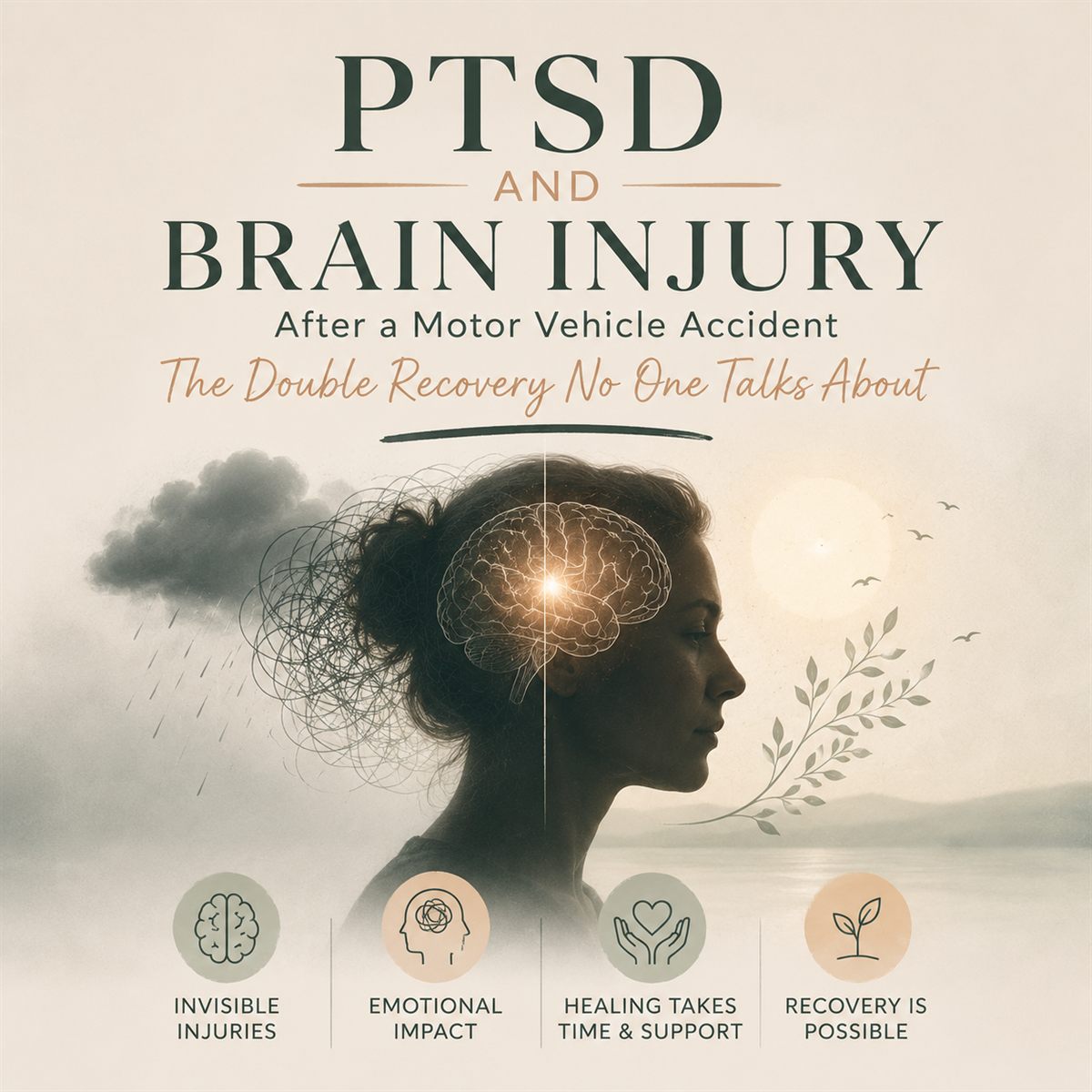
Trauma and anxiety after a motor vehicle accident.
Learn moreRacing thoughts, worry, and panic.
Learn moreEMDR and trauma-informed care.
Learn moreWork with your brain, not against it.
Learn moreExhaustion that sleep does not fix.
Learn moreLoss, change, and the chapters between.
Learn moreFrom the blog
Honest, practical writing on what you are navigating — a gentler way to learn more before reaching out.

For referring professionals
If you are a lawyer, family physician, occupational therapist, or case manager, we welcome referrals and aim to keep the process simple.
Psychological support after concussion, brain injury, and motor vehicle accidents, including PTSD, anxiety, depression, and the emotional adjustment to a changed life.
We work collaboratively with lawyers, occupational therapists, case managers, physicians, and other rehabilitation professionals, and can provide receipts and clinical documentation to support an accident benefits claim, at a pace that protects recovery.
Direct billing to auto insurers through HCAI for open accident benefits claims. For extended health plans, we provide receipts for you to submit for reimbursement.
In person in North York or virtually across Ontario, with a free 15-minute consultation to check fit.
To refer a client or ask whether we are a fit, call (647) 983-6940 or use our contact page.
Mindful Connections Therapy
Book a free 15-minute call and we will see if we are a good fit, no pressure, no commitment. Free and confidential, phone or video, in person in North York or online across Ontario.