
EMDR therapy in North York and Toronto

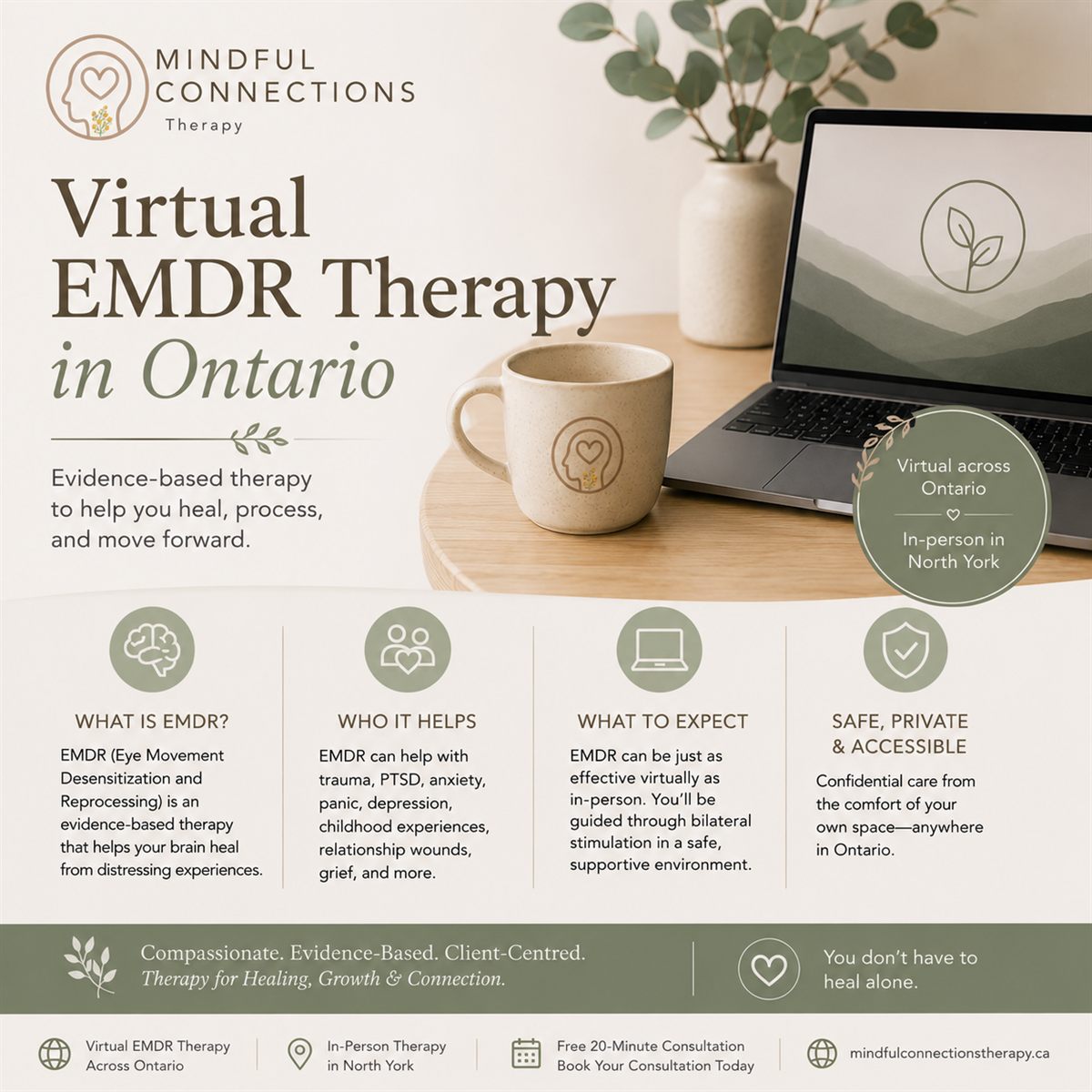
EMDR (Eye Movement Desensitization and Reprocessing) is a structured, evidence-based therapy that helps your brain reprocess distressing memories, so they lose their charge and stop feeling stuck in the present. We offer EMDR in person in North York and Toronto, and online across Ontario.
A method tailored to you, never one-size-fits-all. The memory stays; the grip it has on you can loosen.
In plain language
EMDR is built on a simple observation: sometimes an overwhelming experience does not get fully digested by the brain. It stays stored with all its original images, beliefs, and body sensations, so a present-day reminder can fire it off as if it were happening now.
Using gentle bilateral stimulation (such as guided side-to-side eye movements or taps) while you briefly hold a memory in mind, EMDR helps the brain do what it could not at the time: process the experience so it can settle into the past.
Melissa is also trained in the Flash Technique (EMDRIA-approved training), a newer step inside the EMDR protocol. Before a painful memory is processed, we take the edge off it first, without you having to describe it or hold it in mind. The reprocessing that follows is gentler and far less overwhelming, which is why it suits phobias, OCD and complex trauma, where a memory can feel too big to approach directly.
A helpful frame: everyone carries some trauma. There are 'big-T' traumas, an accident, an assault, a sudden loss, and 'small-t' ones, the quieter times we felt unsafe, unseen, or not enough. Both can leave an imprint, and both can be reprocessed. EMDR is well studied for single-incident trauma, like one frightening event, as well as for the layered experiences that build up over time, and this page is our main hub for how we use it.
In our work together
What we work on is yours to name. Here is how EMDR tends to show up in our sessions, woven in with whatever else fits you.
Before any reprocessing, we build grounding tools and a felt sense of safety, so you stay within your window of tolerance.
We identify a specific memory, the belief it left you with, and how it shows up in your body today.
Where it helps, we start with the Flash Technique to lower the memory’s intensity first. Then, with brief bilateral stimulation while you hold the memory in mind, the brain processes it, and the distress softens.
We strengthen a more accurate, kinder belief about yourself in its place.
Wondering if EMDR is the right fit?
That is exactly what the free 15-minute consultation is for. No pressure, no commitment.
Is it a fit?
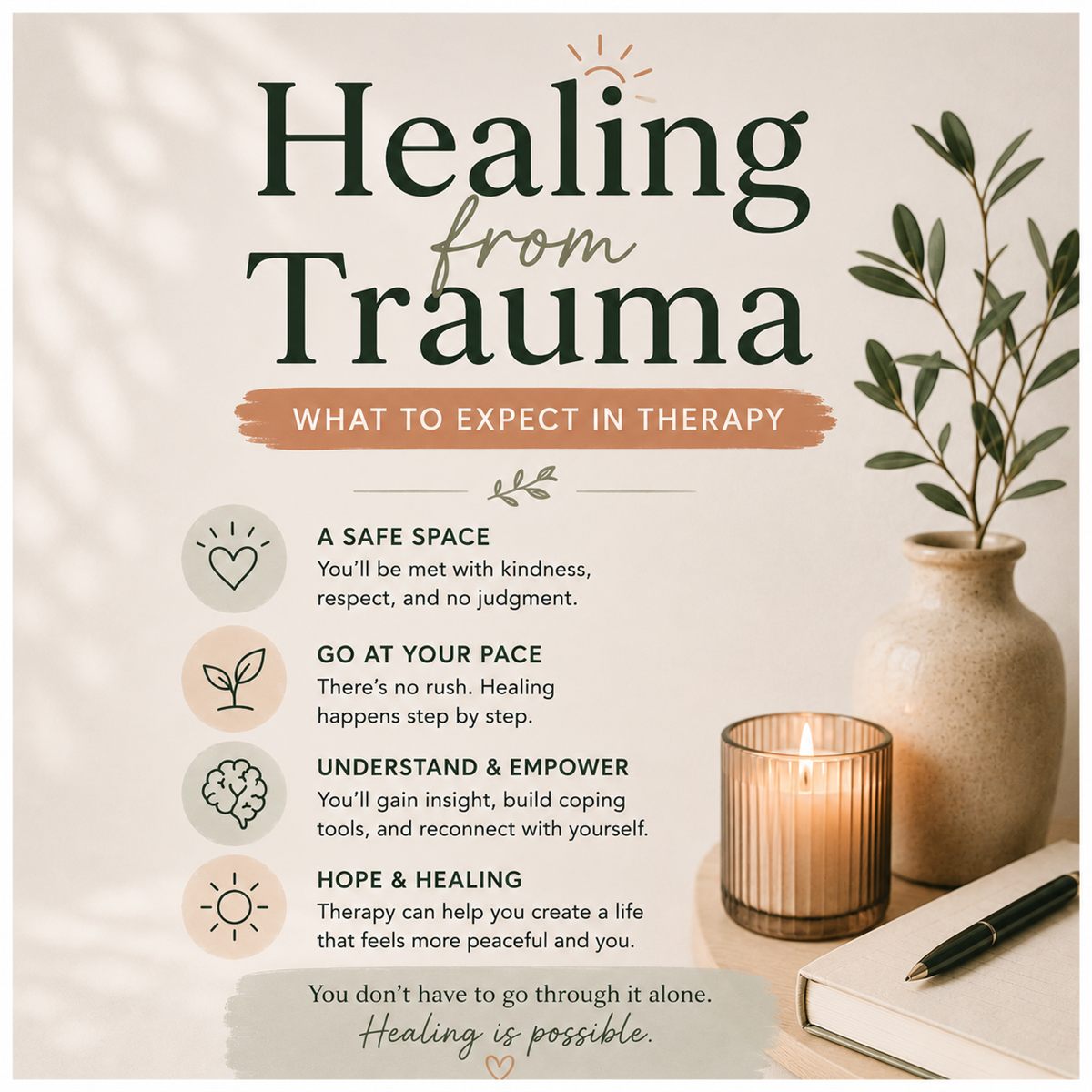
If some of this resonates, EMDR may be part of how we work, always at your pace.
A past event that still intrudes or feels present. Strong reactions that seem bigger than the trigger. Feeling on guard, easily startled, or numb. A belief about yourself rooted in something that happened.
Let old memories settle into the past. Reduce flashbacks, triggers, and reactivity. Feel calmer in your body and present life. Carry a kinder, truer story about yourself.
EMDR is also used for anxiety and panic, phobias such as driving or needles, chronic depression that keeps circling back to old experiences, and OCD, where a memory or a belief is keeping the pattern in place. Complex trauma from childhood is worked at a slower pace, with more time on stability first.
No single method fits everyone; most of our work blends a few, always at your pace.
Your therapist

 Member of EMDRIA and EMDR Canada, 2026
Trauma is the heart of Melissa’s practice. She supports people with complex trauma and PTSD: a single event that will not settle, years of it from childhood, or the kind that shows up as a nervous system that never quite switches off. She also uses EMDR for chronic depression, phobias, anxiety and OCD, where a memory or a belief is holding the pattern in place. She is also trained in the Flash Technique, an EMDRIA-approved addition to the EMDR protocol that lowers the intensity of a memory before it is reprocessed, without you having to describe it or hold it in mind. What matters most to her is that you feel understood before anything else happens. Stability comes first, the pace is yours, and no memory is worked on until you have solid ground to stand on.
She weaves EMDR together with parts work (IFS) and close attention to what the body is holding, because trauma rarely lives in one place. Some sessions are memory reprocessing. Others are slower: building resources, noticing what your body is doing, making room for the part of you that is not sure it wants to go there yet. Both count as the work.
She became a therapist because she believes that feeling truly understood can change everything, and that no one should have to carry what happened to them alone. Expect warmth, honesty, and the occasional gentle nudge.
Often paired with EMDR
EMDR rarely works alone. These are the approaches it most often sits alongside.
Looking for EMDR therapy in Toronto? We see clients in person in North York and online across Ontario.
Questions, answered
A few of the things people ask before booking. Anything else, just ask on your free call.
From the blog
Honest, practical writing on what you are navigating — a gentler way to learn more before reaching out.

Mindful Connections Therapy
Book a free 15-minute call and we will see if we are a good fit, no pressure, no commitment. Free and confidential, phone or video, in person in North York or online across Ontario.